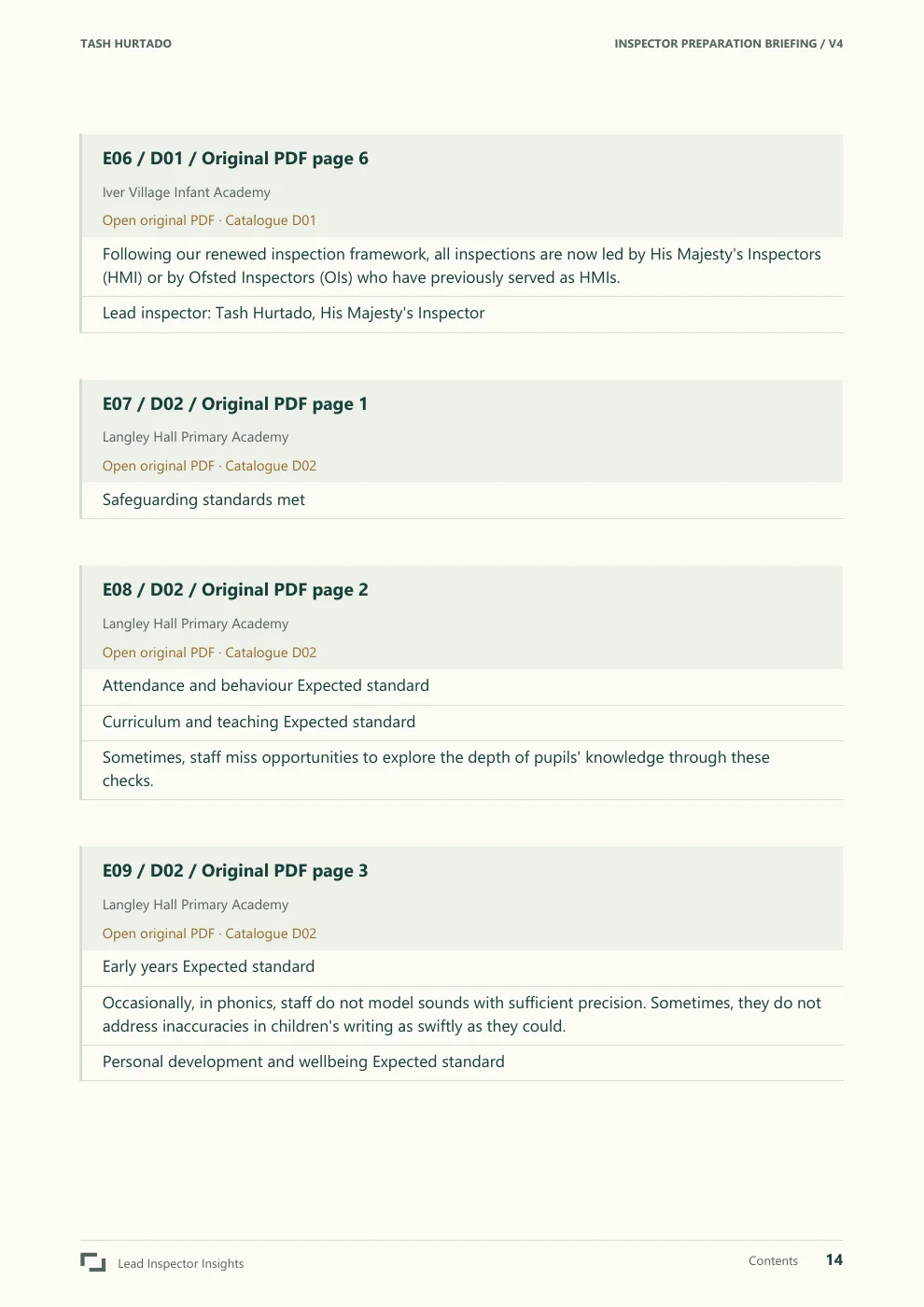
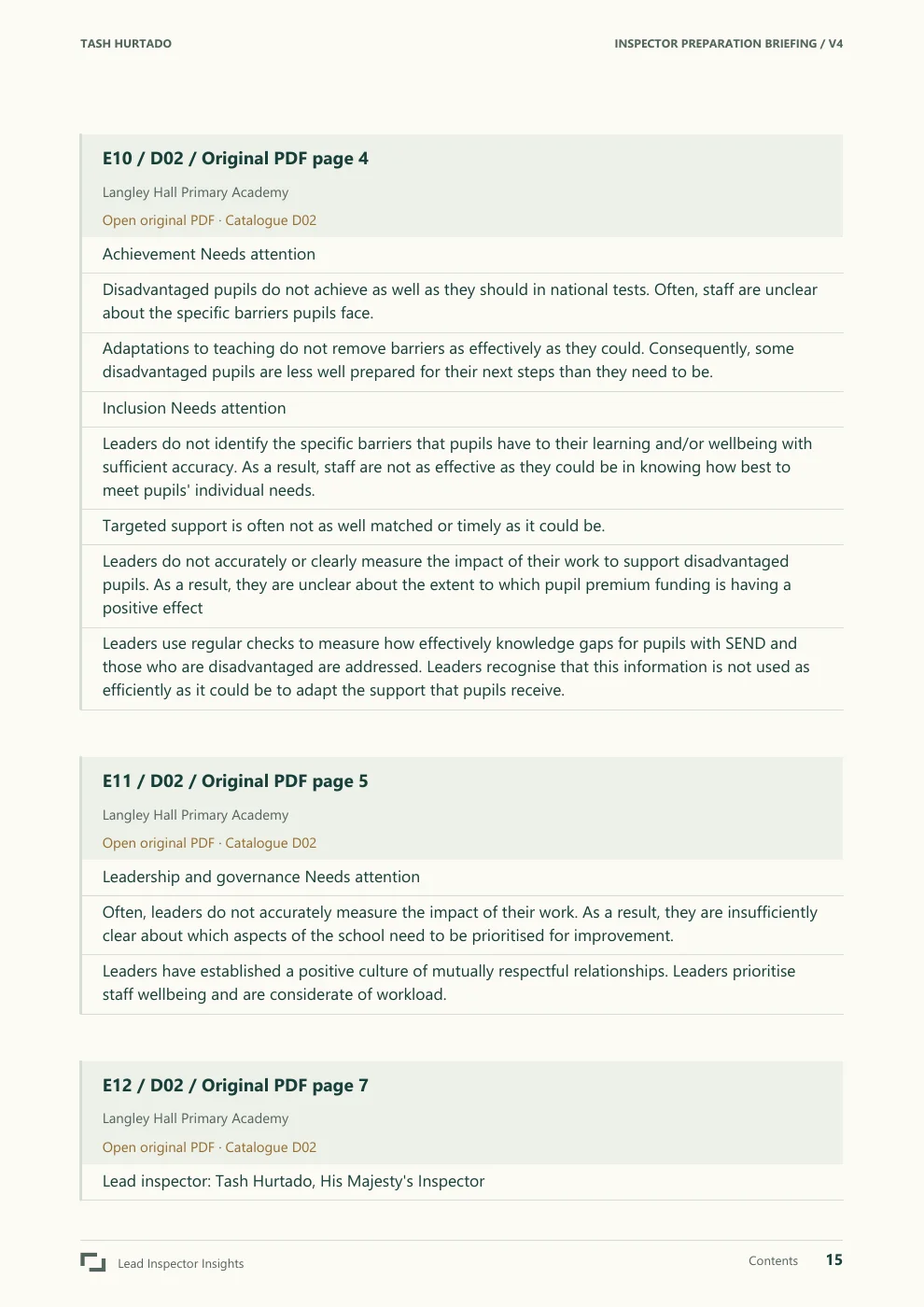
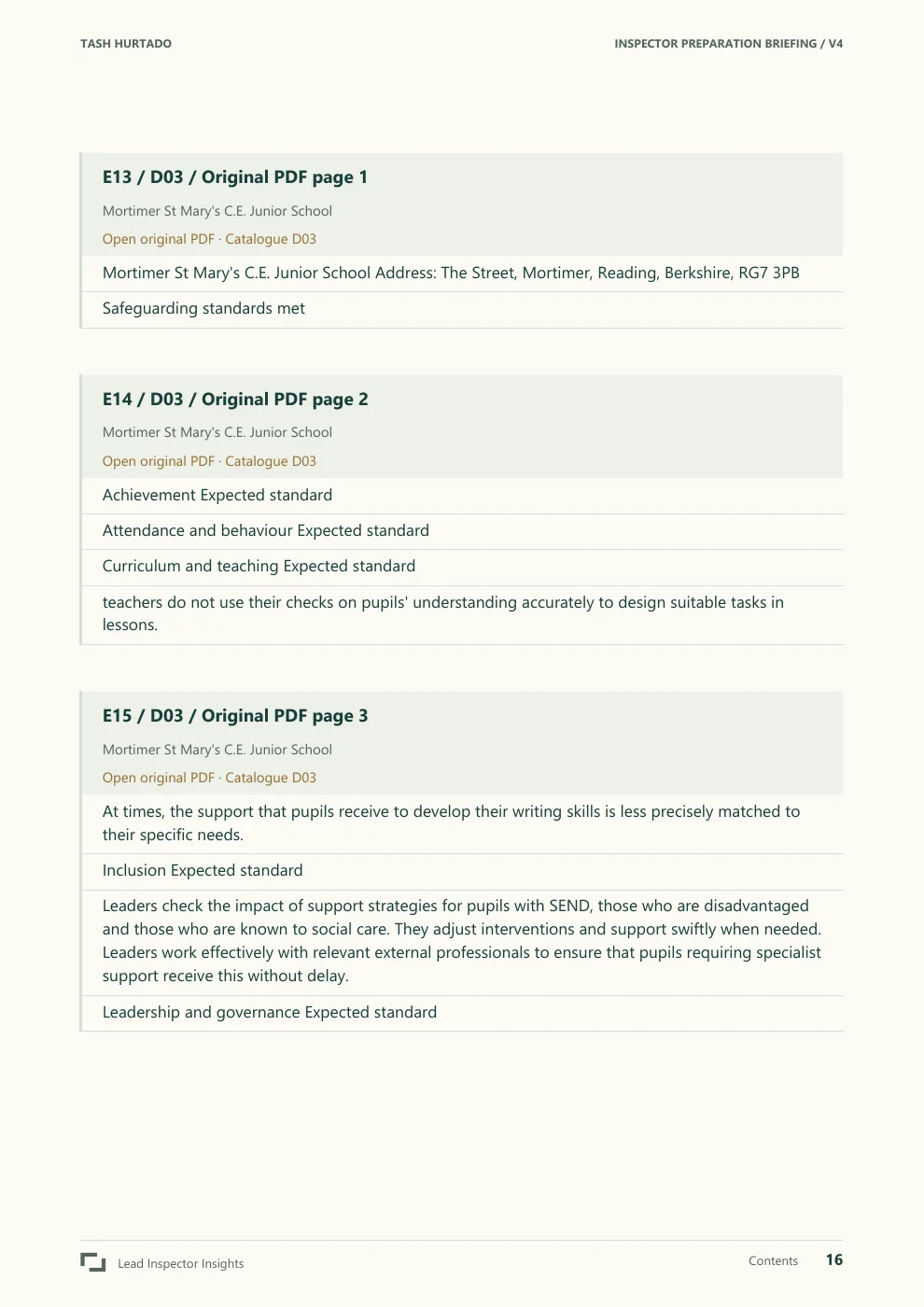
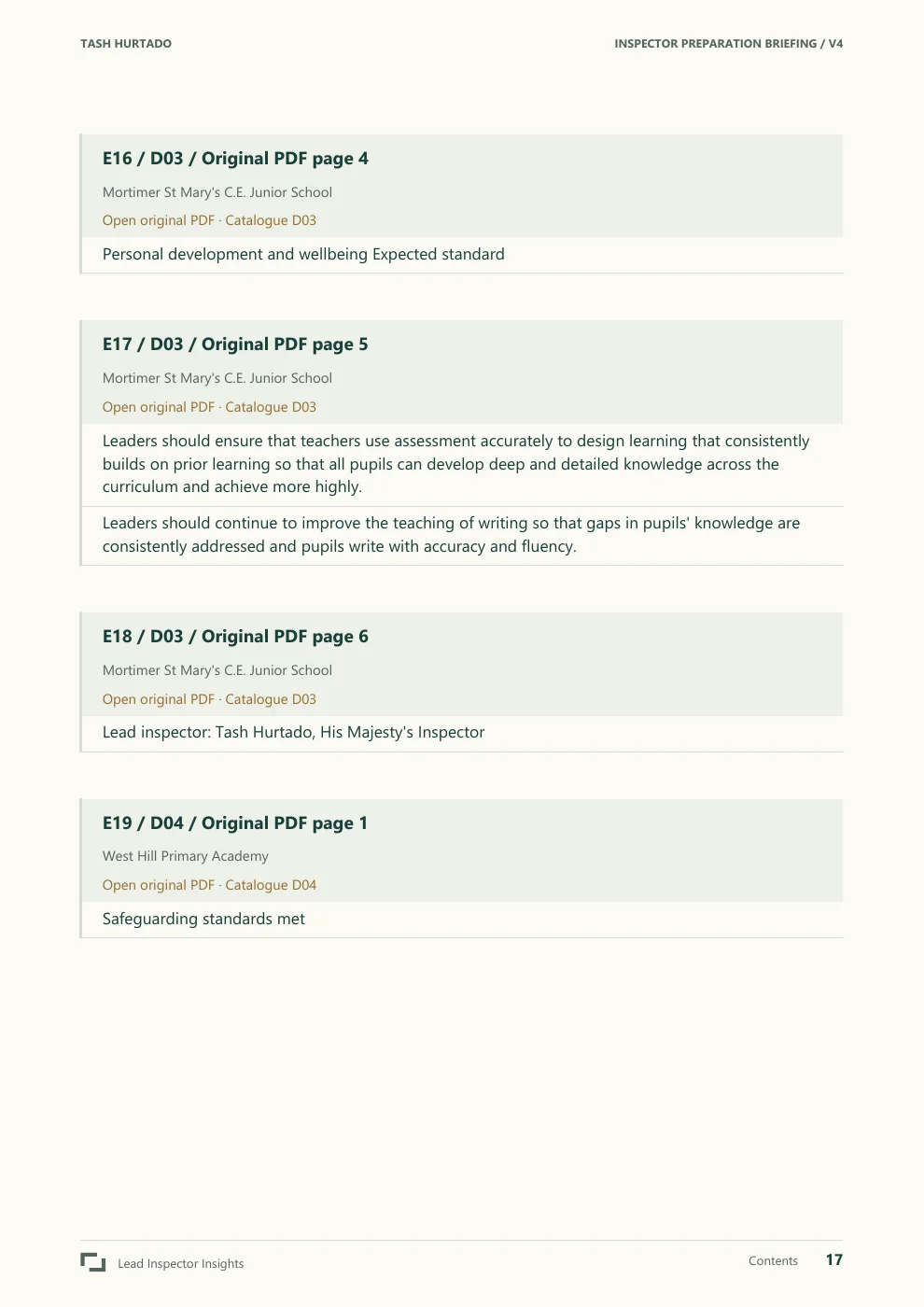
Start with the linked reports.
Each profile shows the school reports linked in our collection and the dates they cover. Check the recorded inspector role and coverage before buying. The collection may be incomplete.
Read a complete sample report
Explore the published inspection record of Tash Hurtado, brought together in a source-backed briefing on recurring scrutiny, positive recognition and preparation.
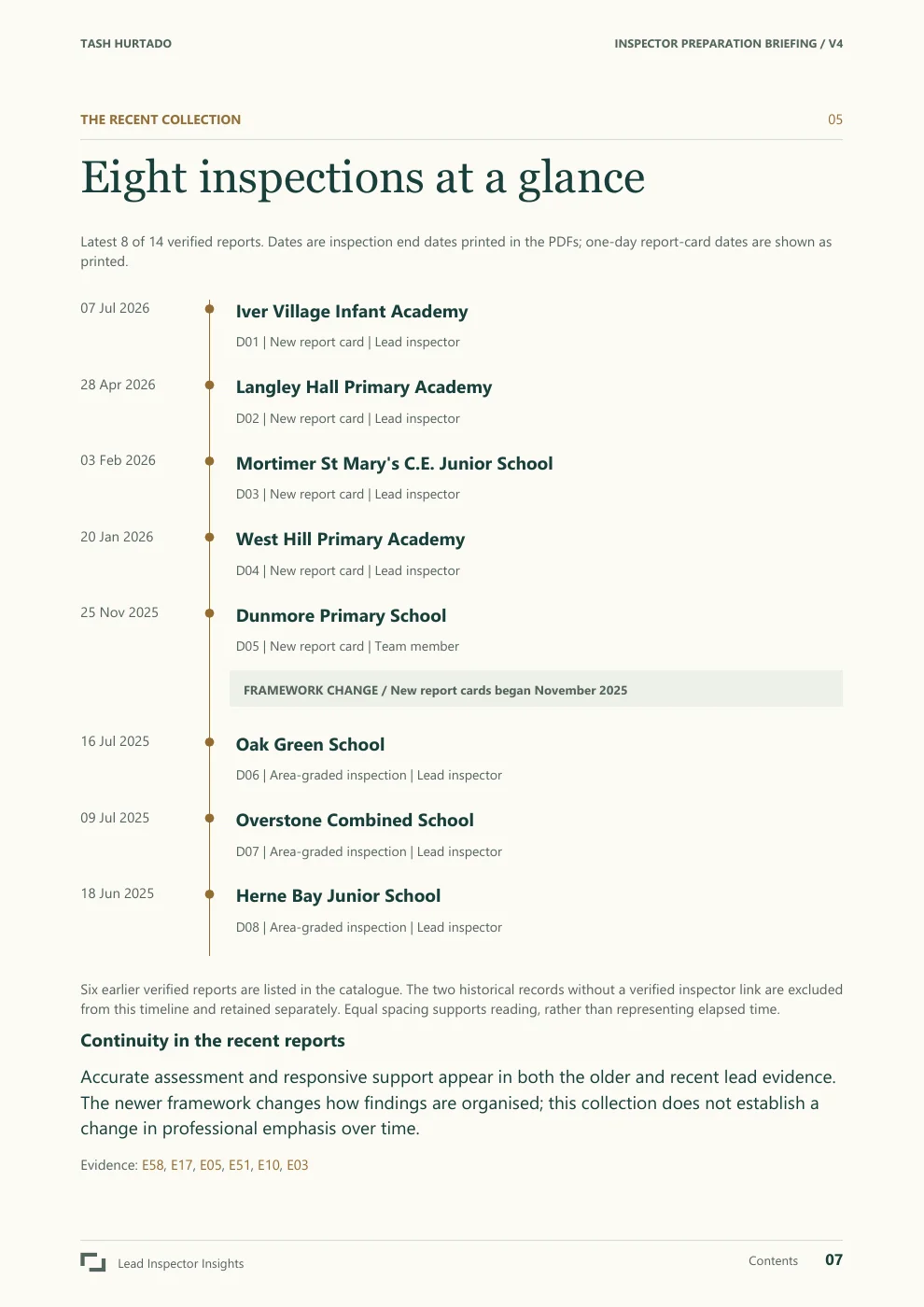
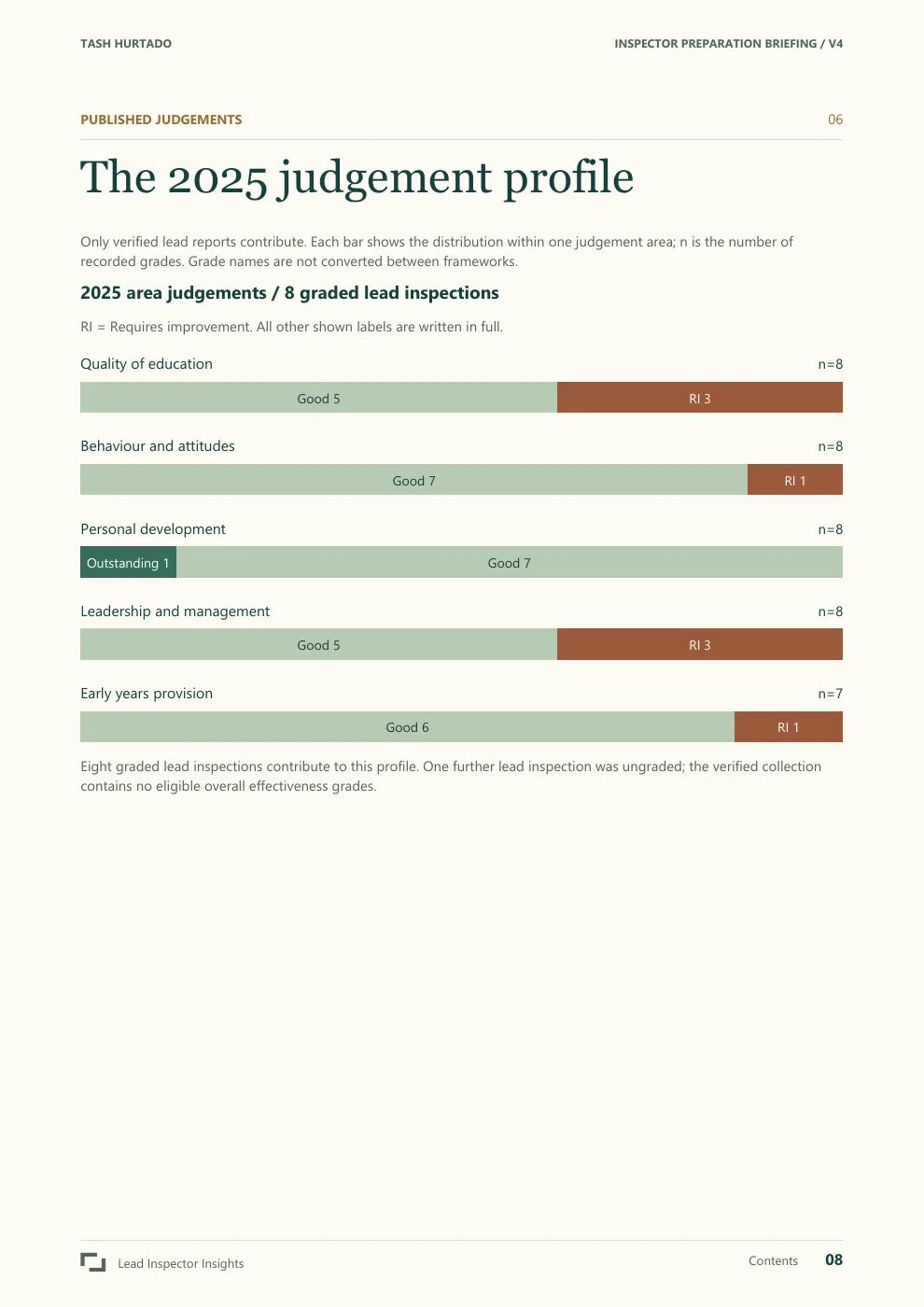
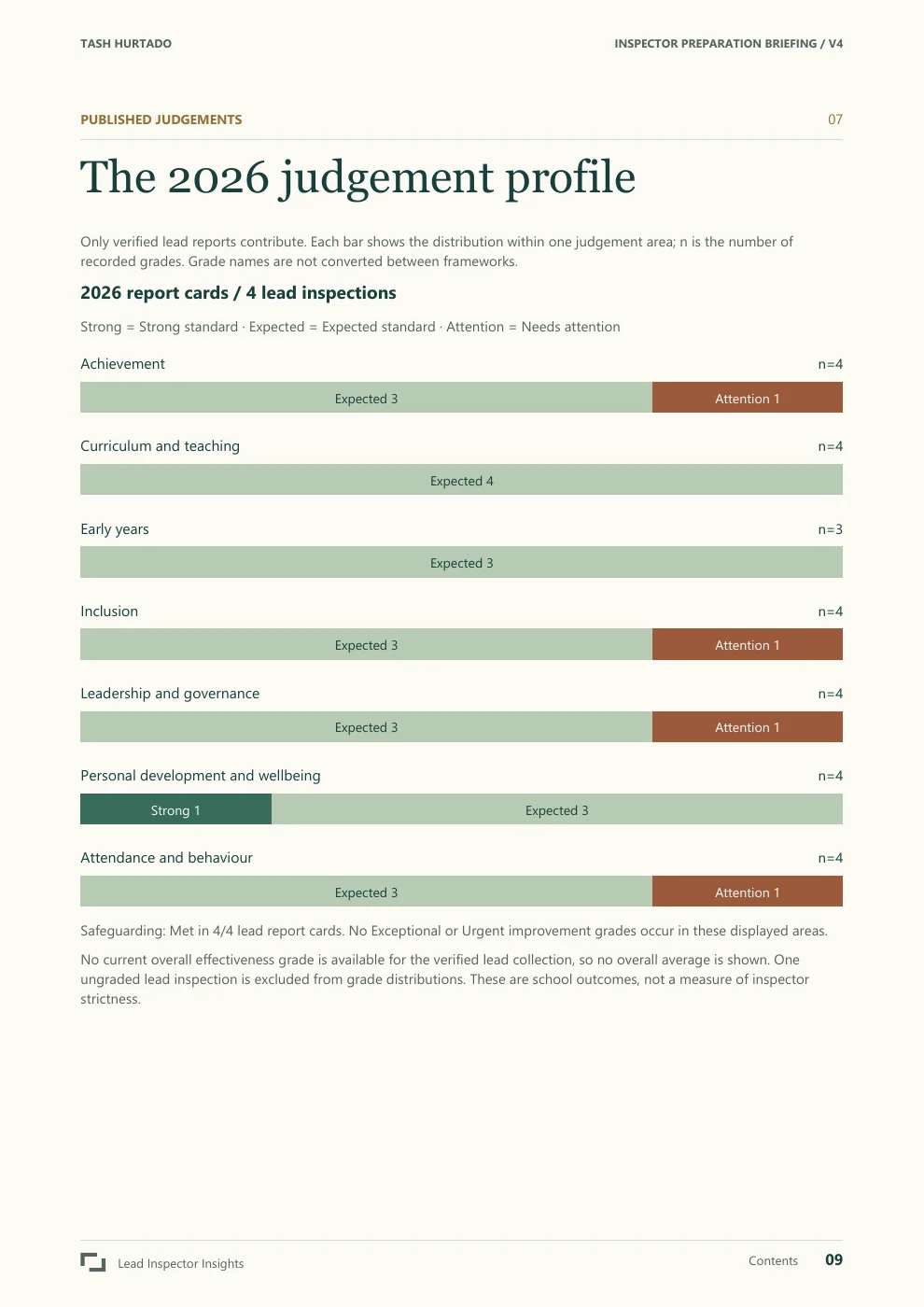
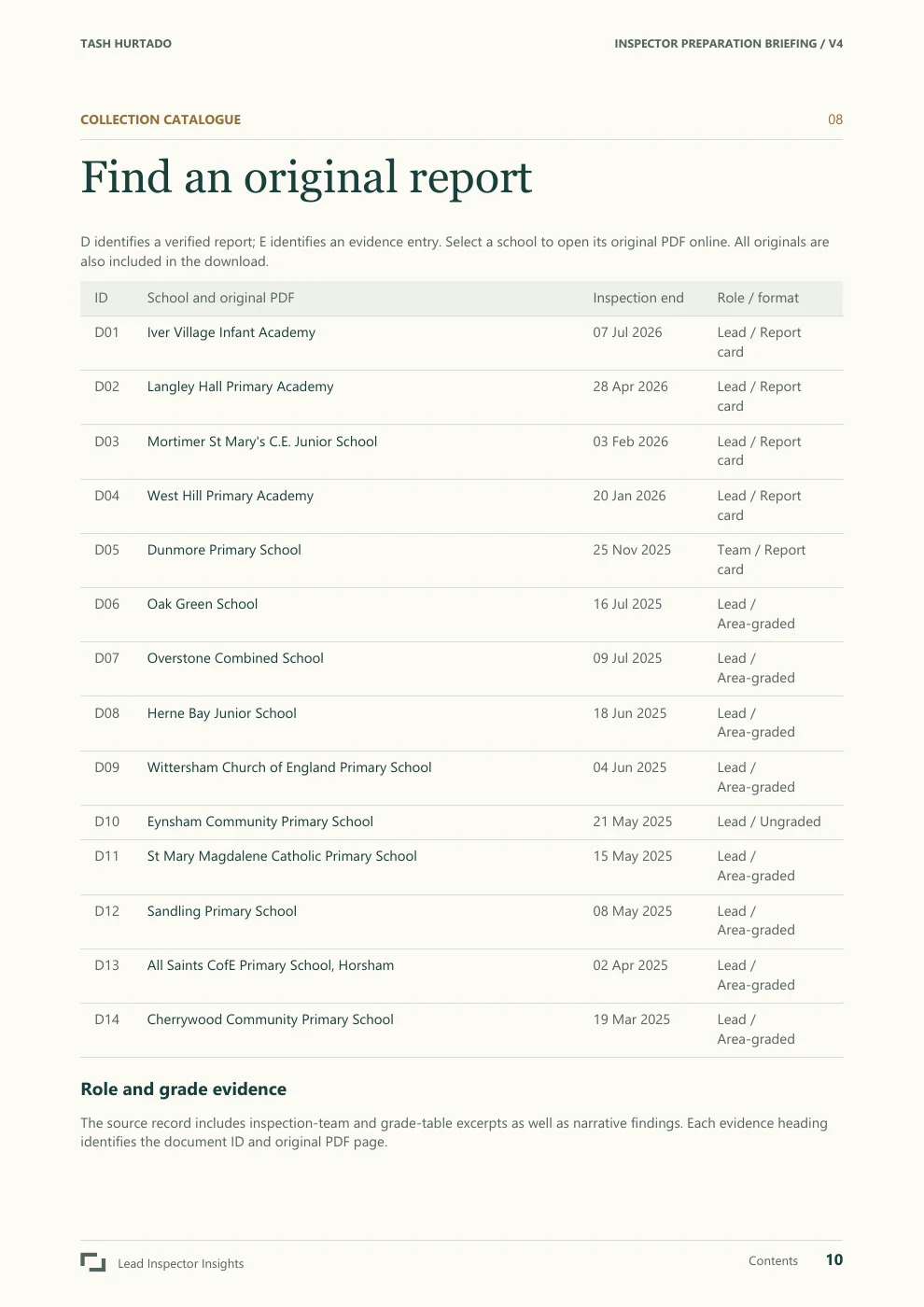
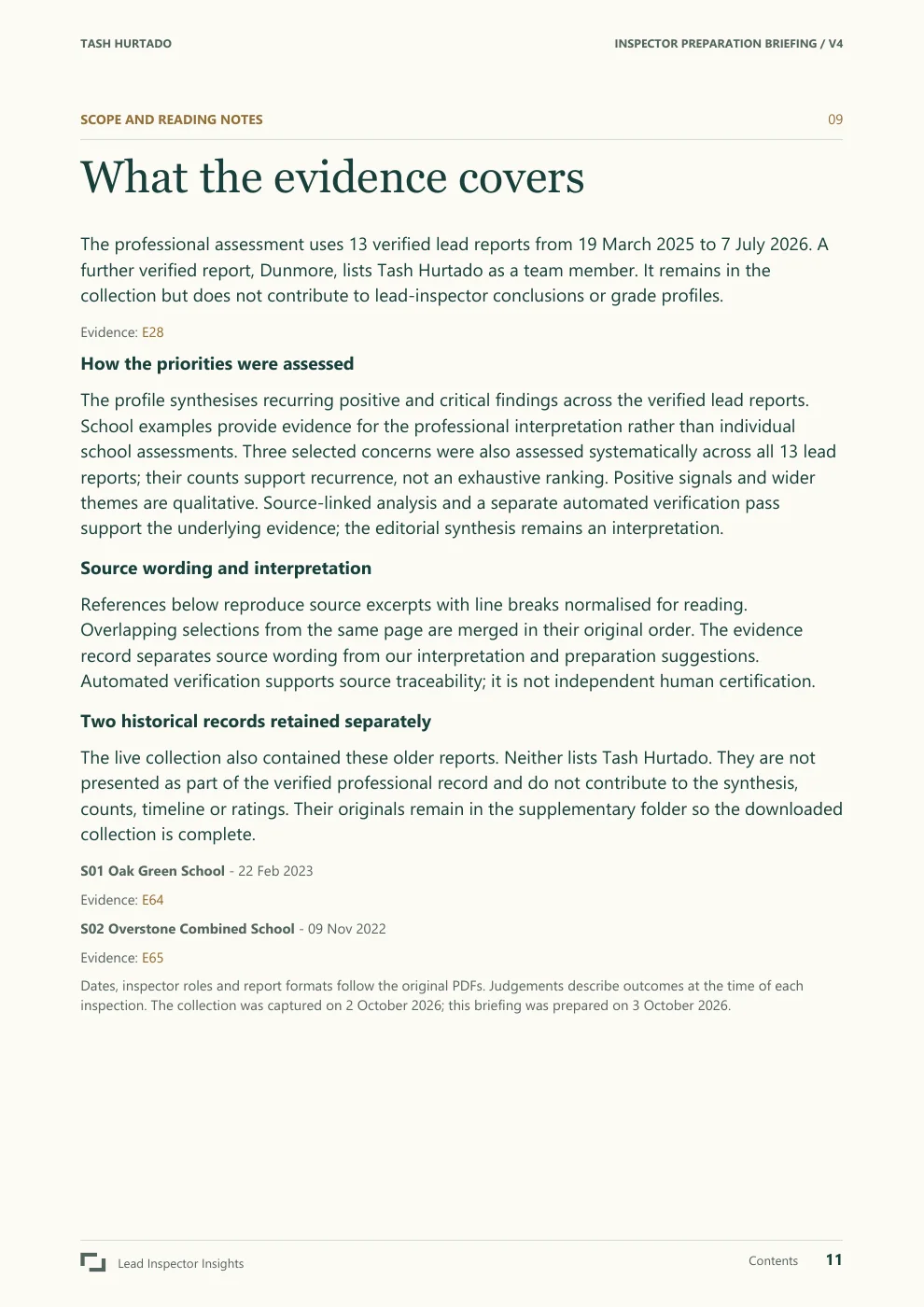
Captured 2 October 2026. The analysis draws on 13 verified lead reports from March 2025 to July 2026. The collection also includes one team-member report and two clearly separated historical reports without a verified inspector link.
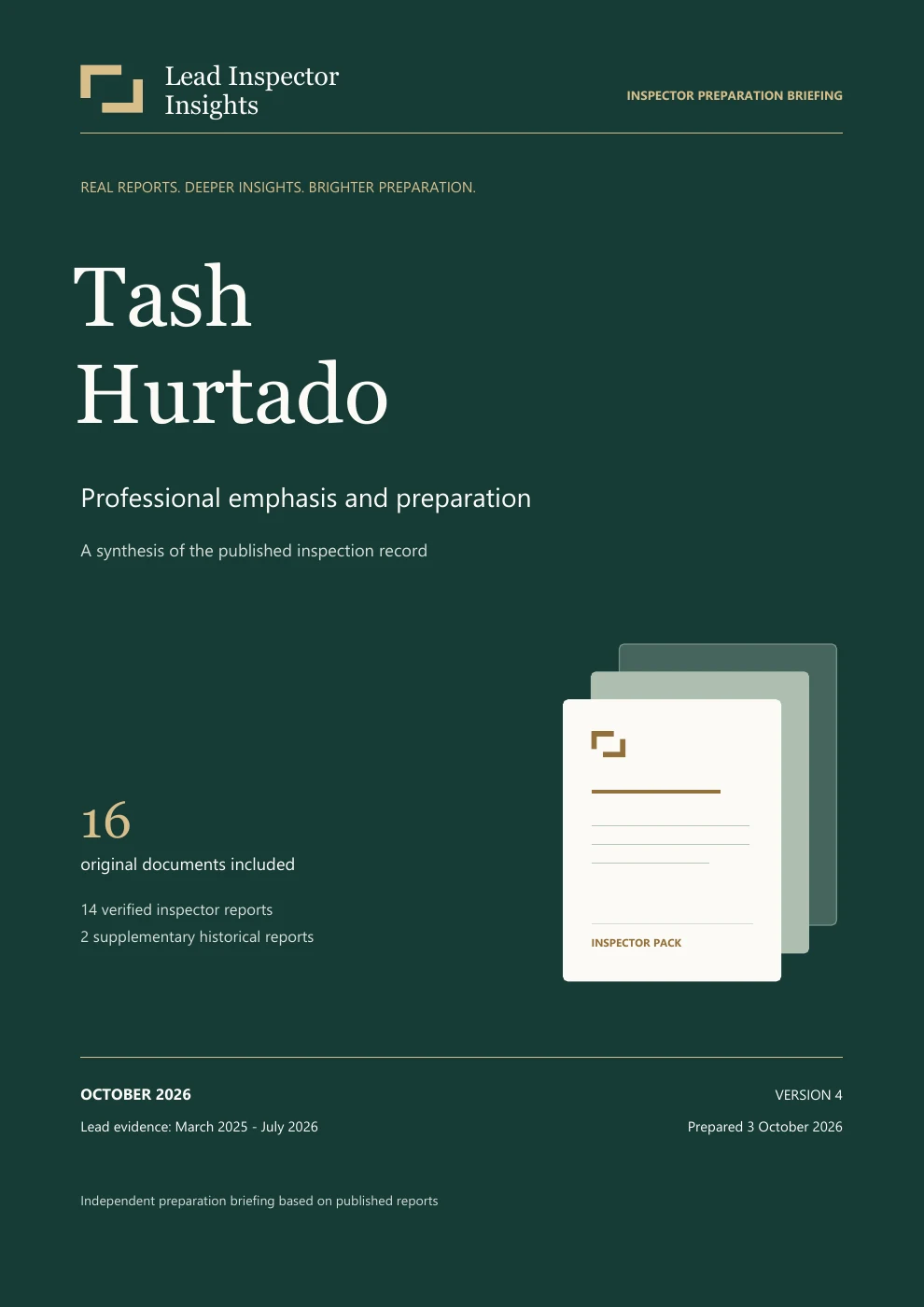
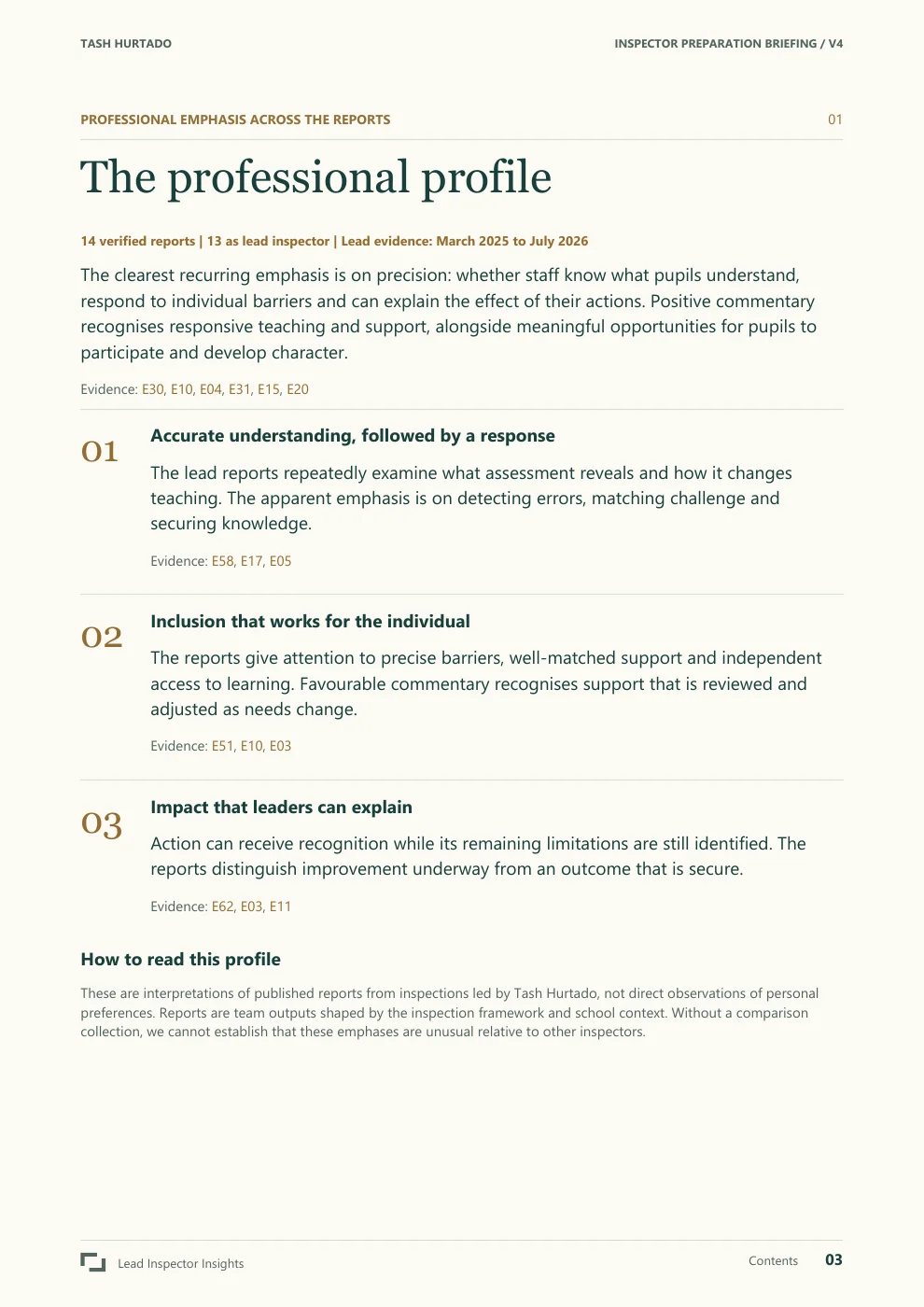
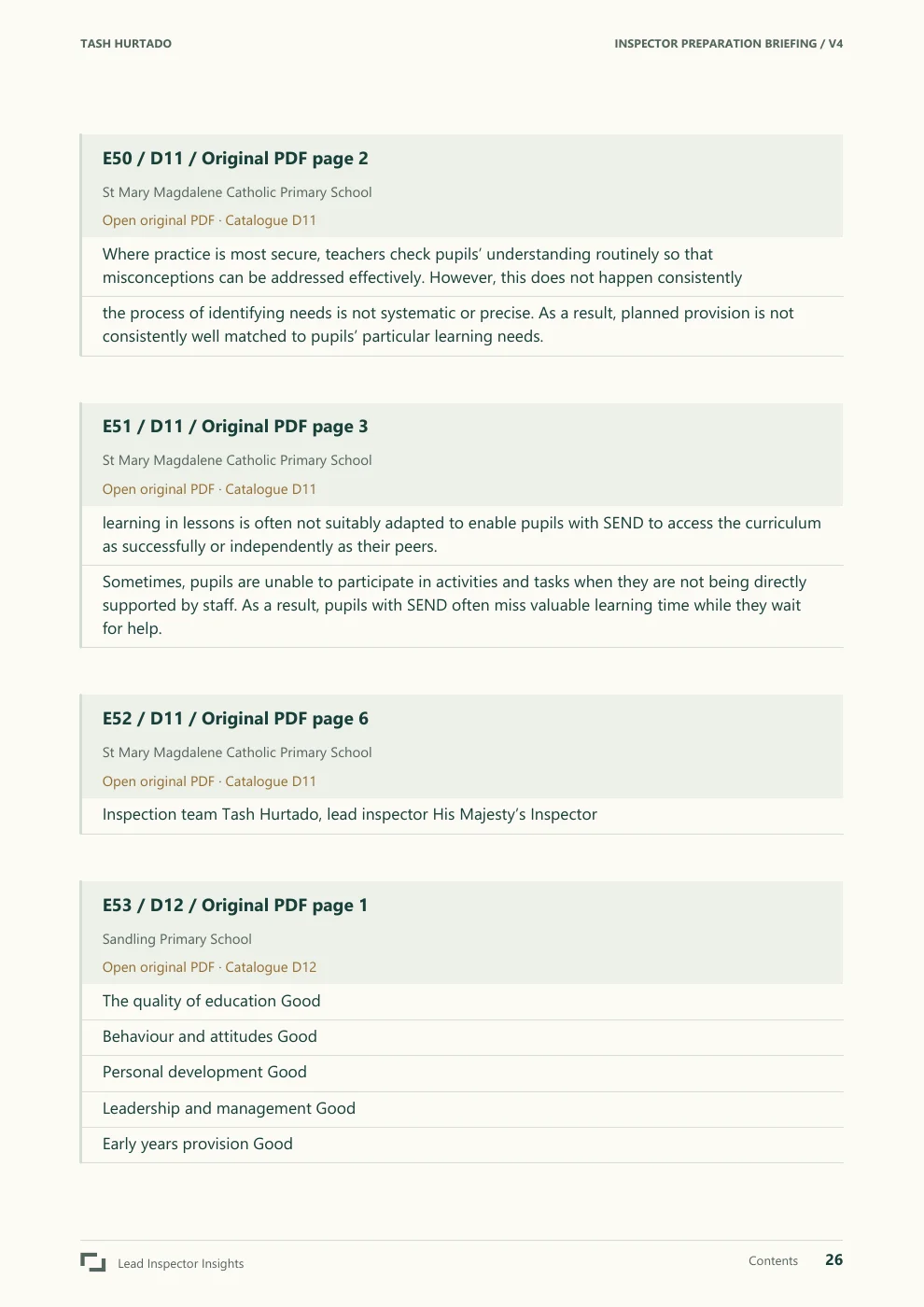
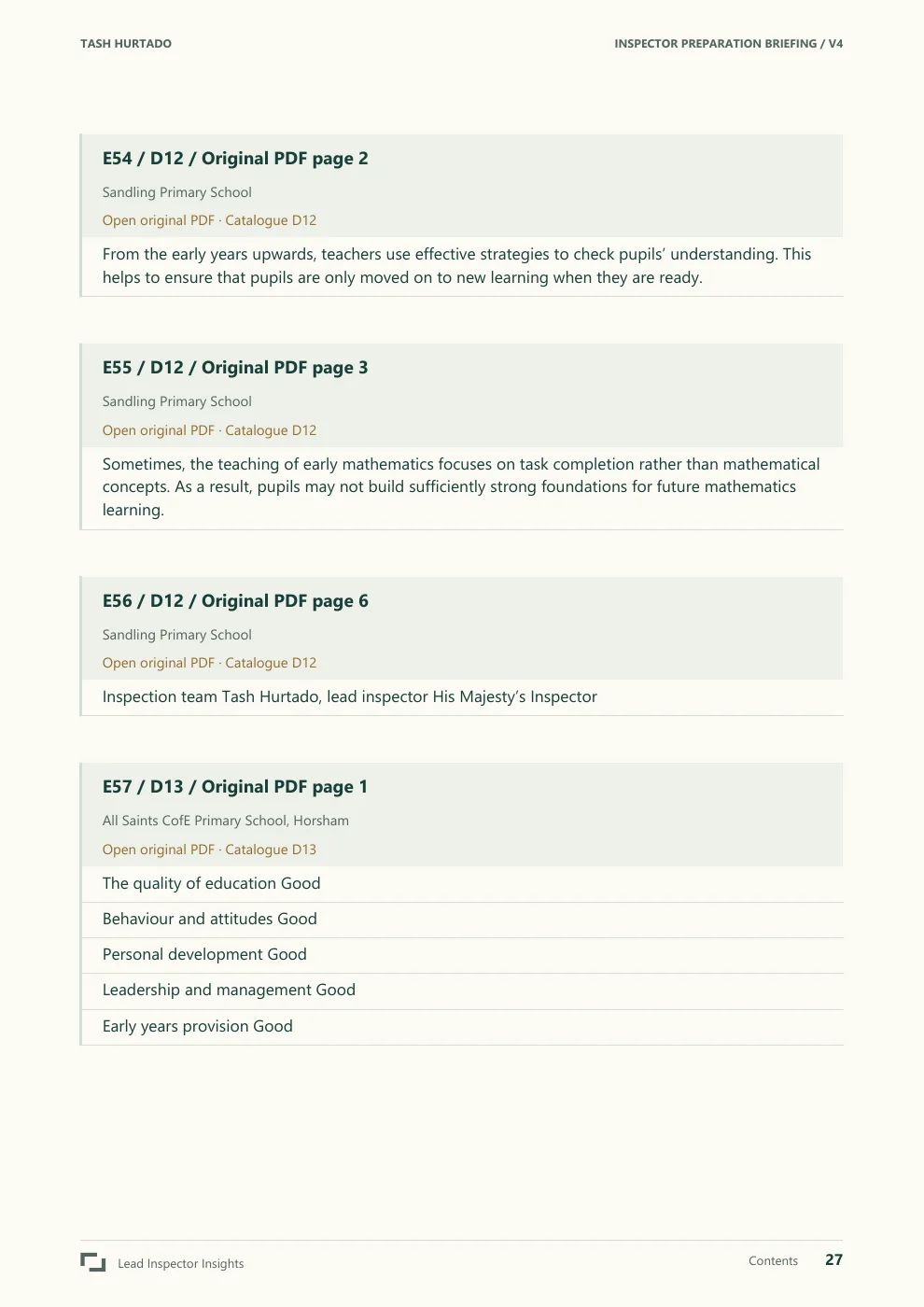
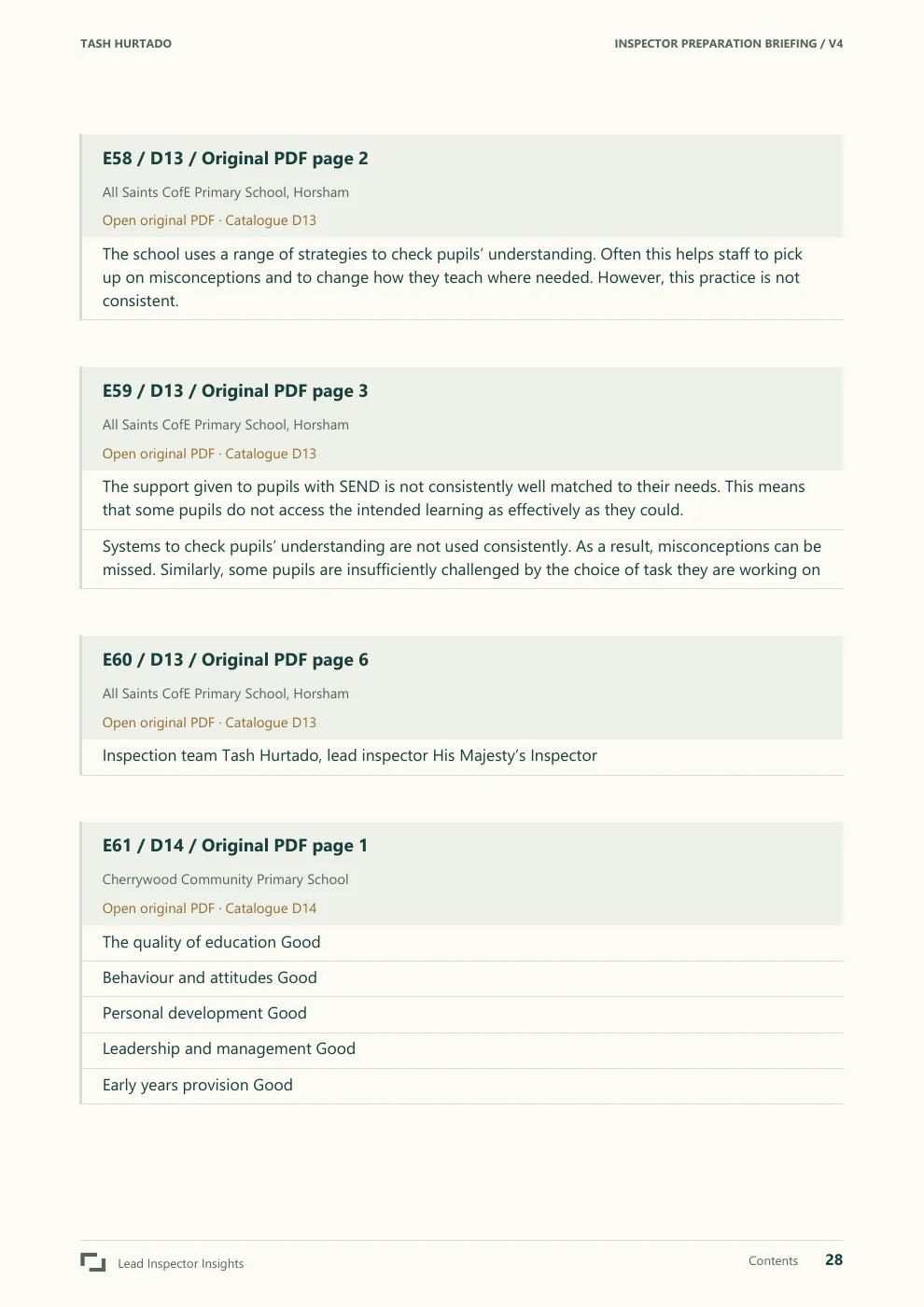
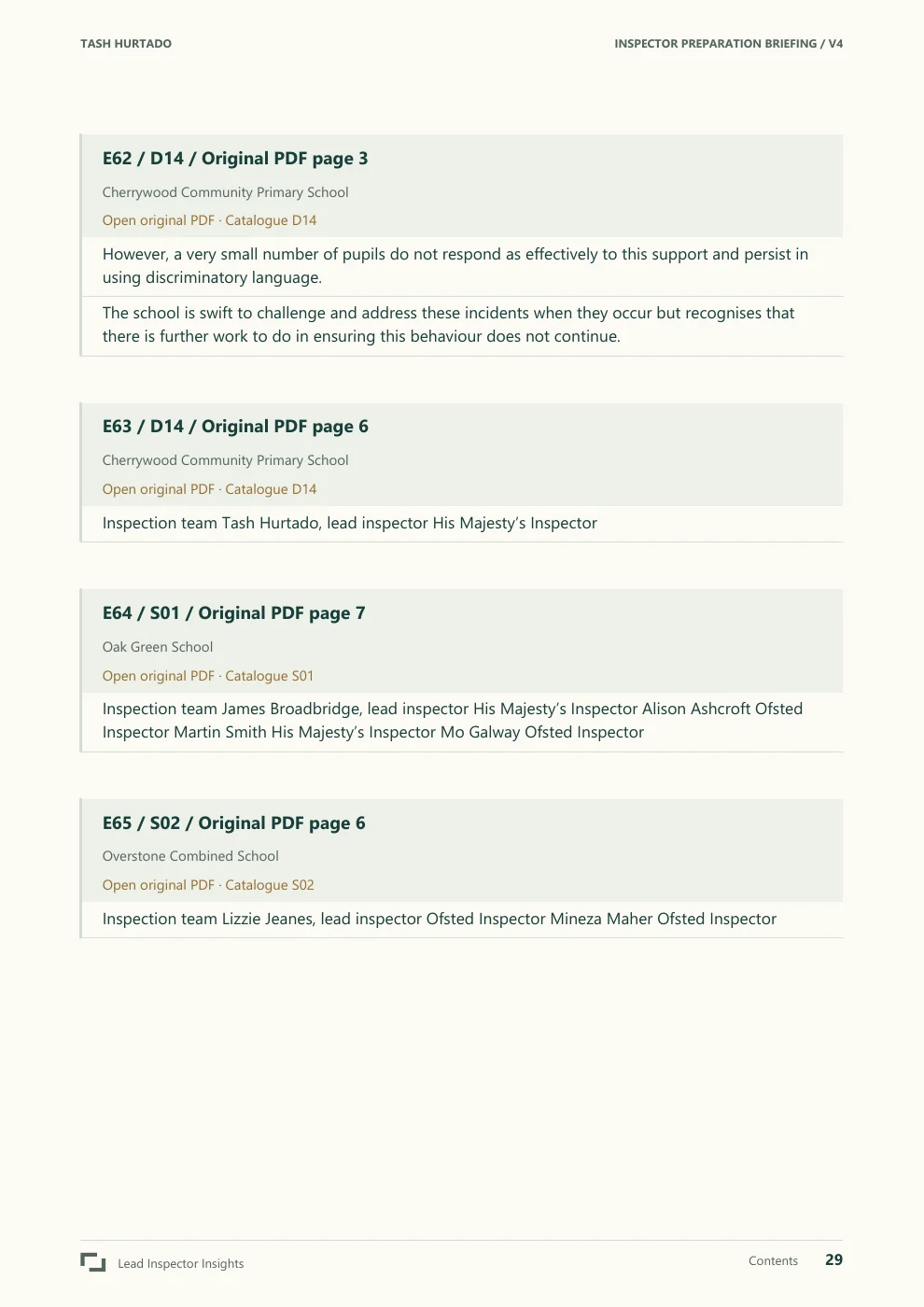
From the sample briefing · page 3
This passage is our interpretation of the collected reports, not a quotation from Ofsted or a statement of the inspector’s personal preferences.
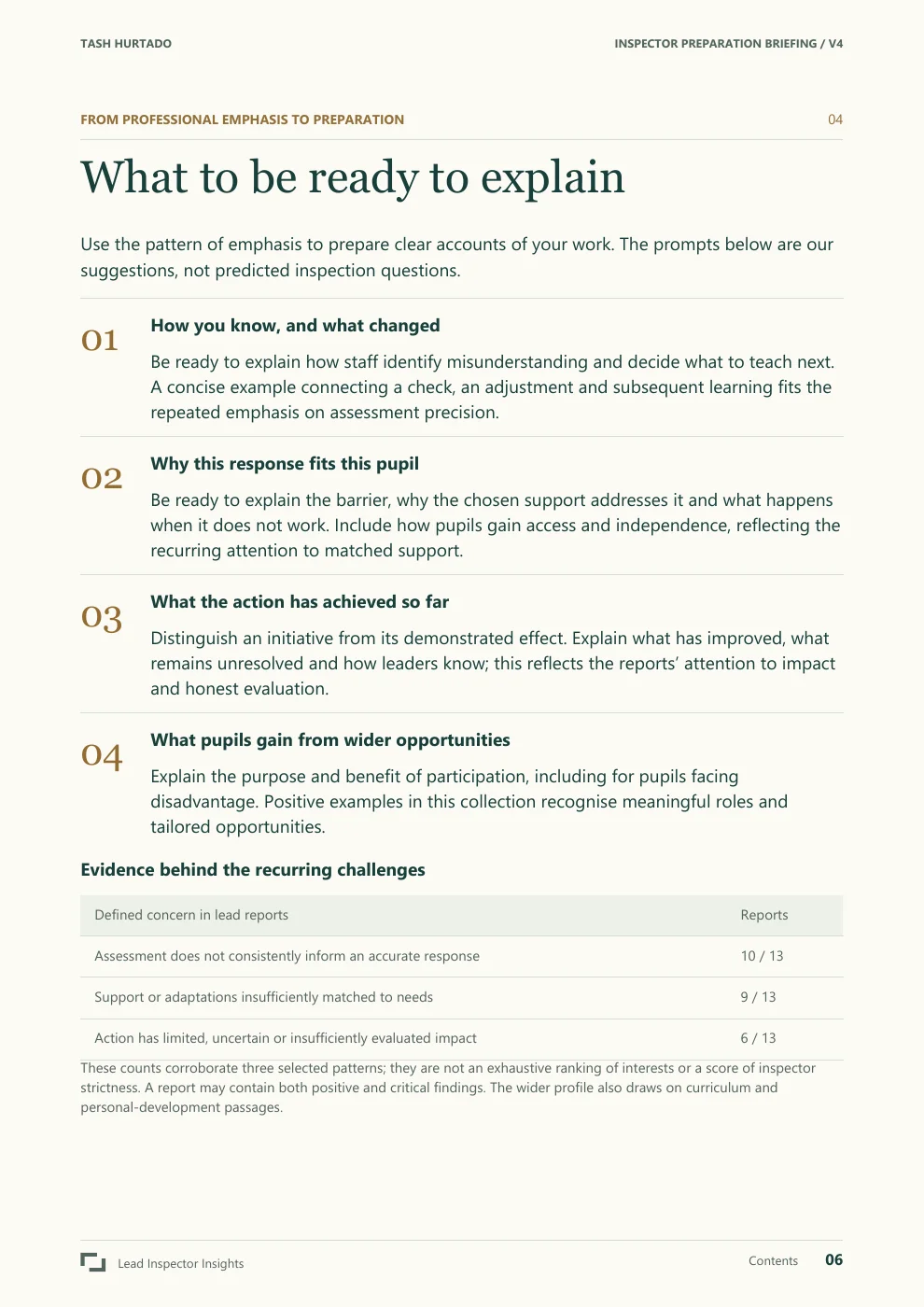
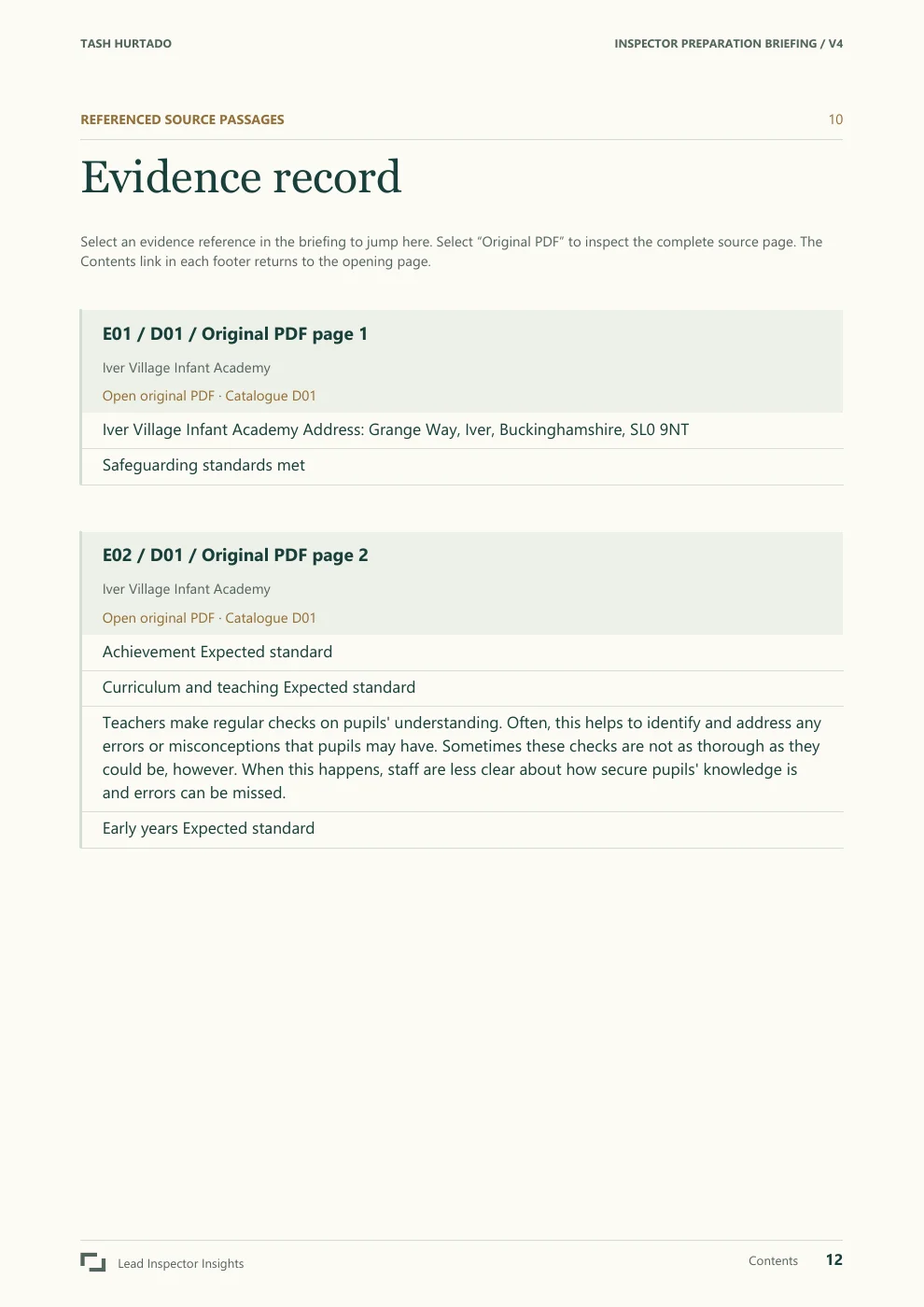
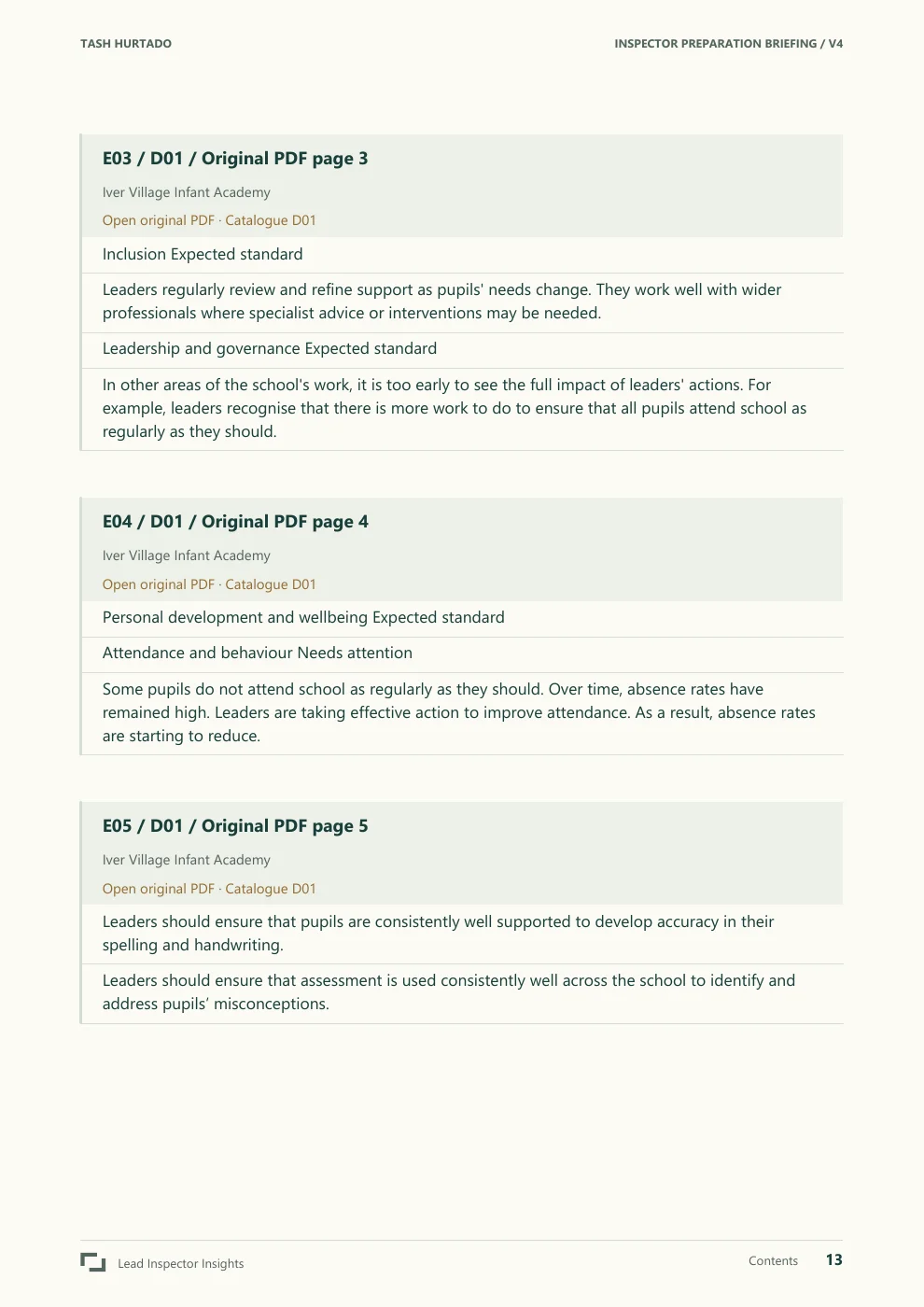
“The lead reports repeatedly examine what assessment reveals and how it changes teaching. The apparent emphasis is on detecting errors, matching challenge and securing knowledge.”
The sample’s analysis uses 13 verified lead reports. A team-member report and two historical reports without a verified inspector link are kept separate from those conclusions.
Read the interpretation and its references in the PDF →A question for your team: How do you connect a check of pupils’ understanding to a teaching adjustment and evidence of subsequent learning?
How to read the sources and coverage limits ↓Inside the report
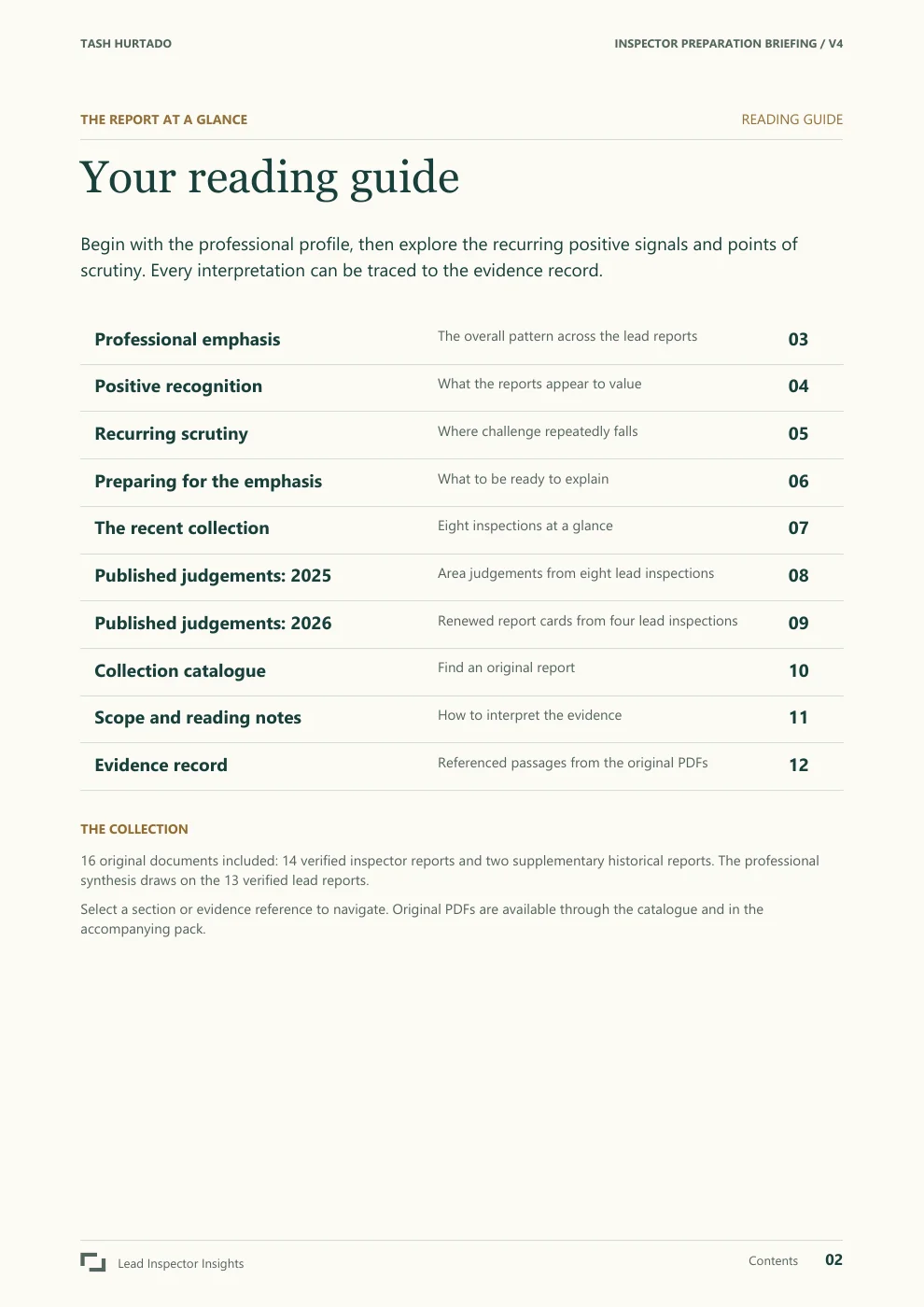
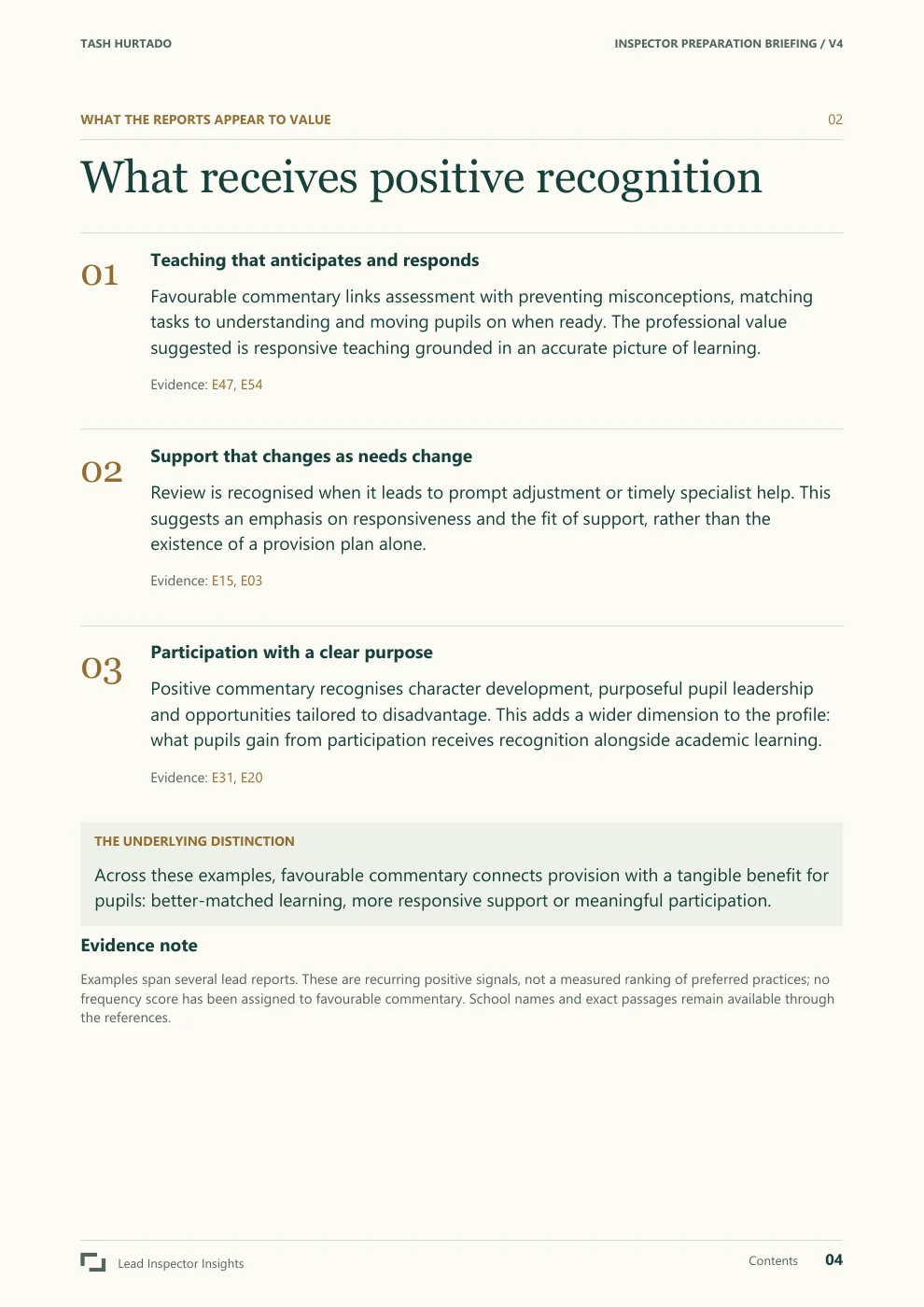
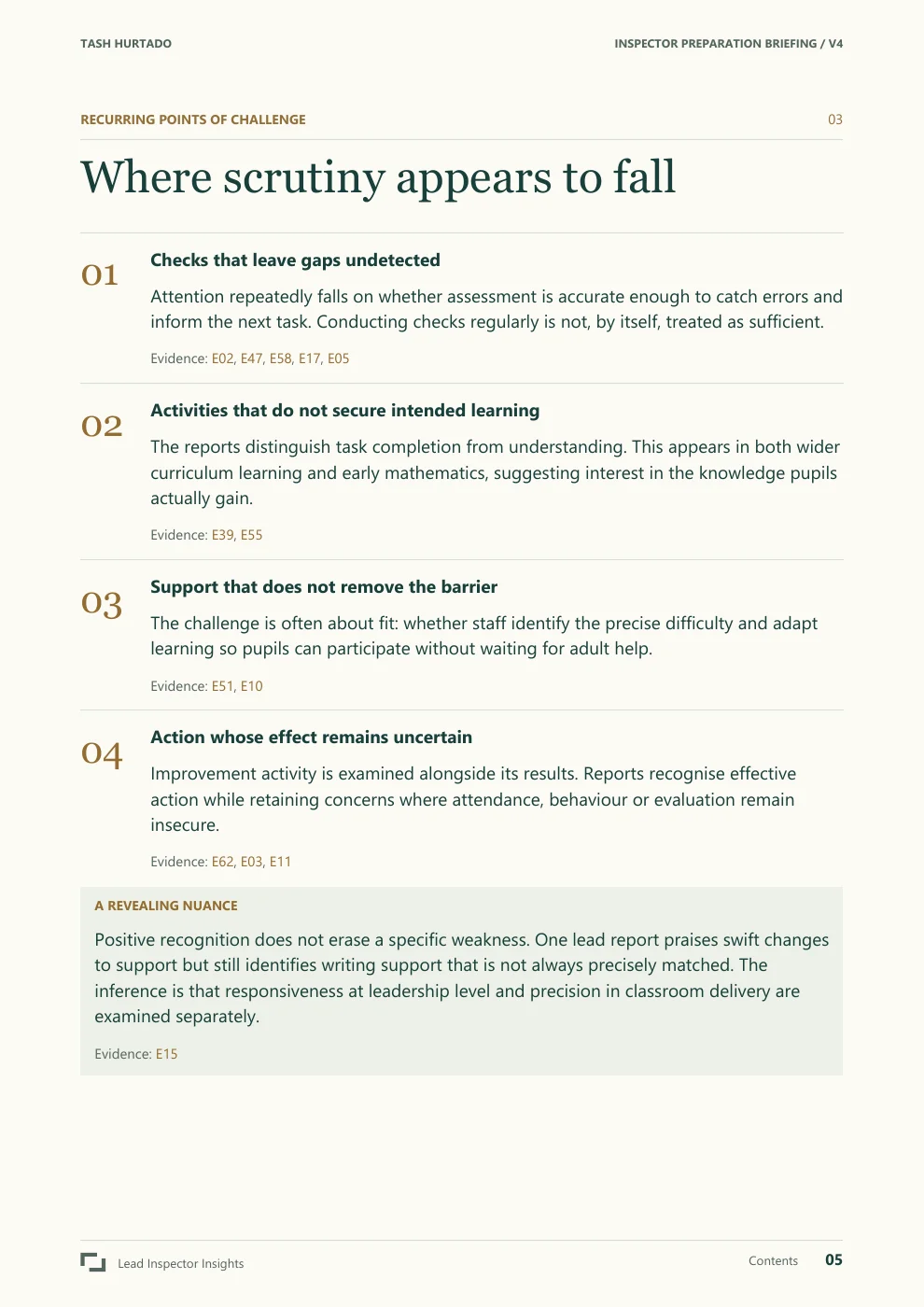
Read the professional profile, recurring positive signals and points of challenge, followed by the timeline, judgement profiles, catalogue and referenced source passages.
Page 1 of 29
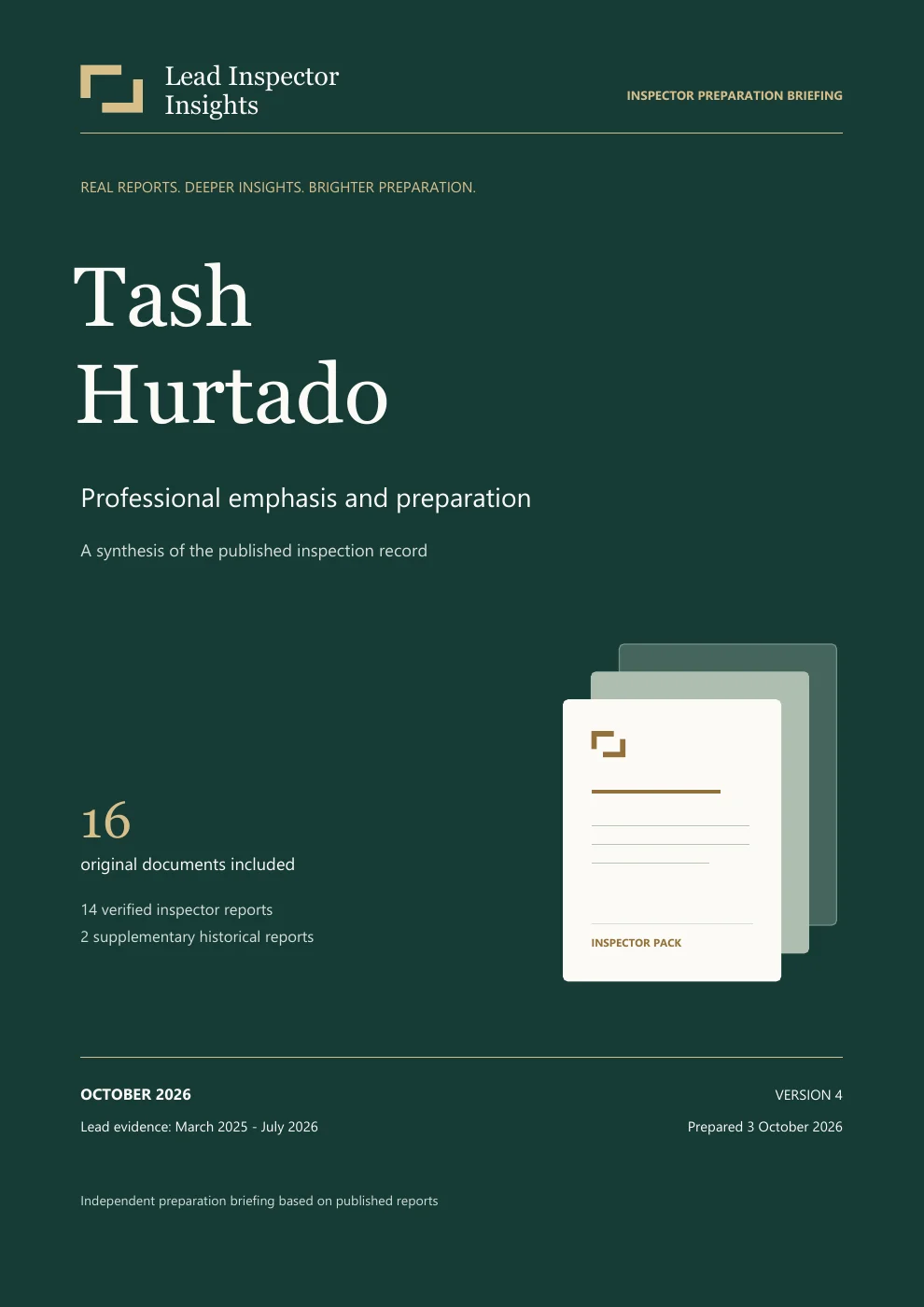
Evidence links within the PDF open the supporting passages and original reports. You can also view an original published Ofsted report. This sample illustrates Tash Hurtado’s collected record; coverage and findings vary by inspector.
How to read an Inspector Pack
A briefing is a starting point for your preparation. The published reports remain the source to check.
Each profile shows the school reports linked in our collection and the dates they cover. Check the recorded inspector role and coverage before buying. The collection may be incomplete.
Follow an evidence reference in the briefing to its source passage and page number. Open the original report to check the wider context. AI-generated interpretation can contain mistakes and should be checked against its sources.
Use the reflection prompts to discuss your own school’s evidence. Findings concern the schools inspected at that time; they do not establish an inspector’s personal preferences or predict a future judgement.
What you are paying for
Ofsted publishes the original inspection reports. Our paid digital pack adds the compilation, a source-backed AI briefing and reflection prompts, with coverage limits made explicit.
This sample illustrates one collected record, not another inspector’s findings. Your inspector’s available evidence determines their pack.
See pack pricing and what is included →Check the available published reports, dates and pack availability for your inspector.
Find your inspector